

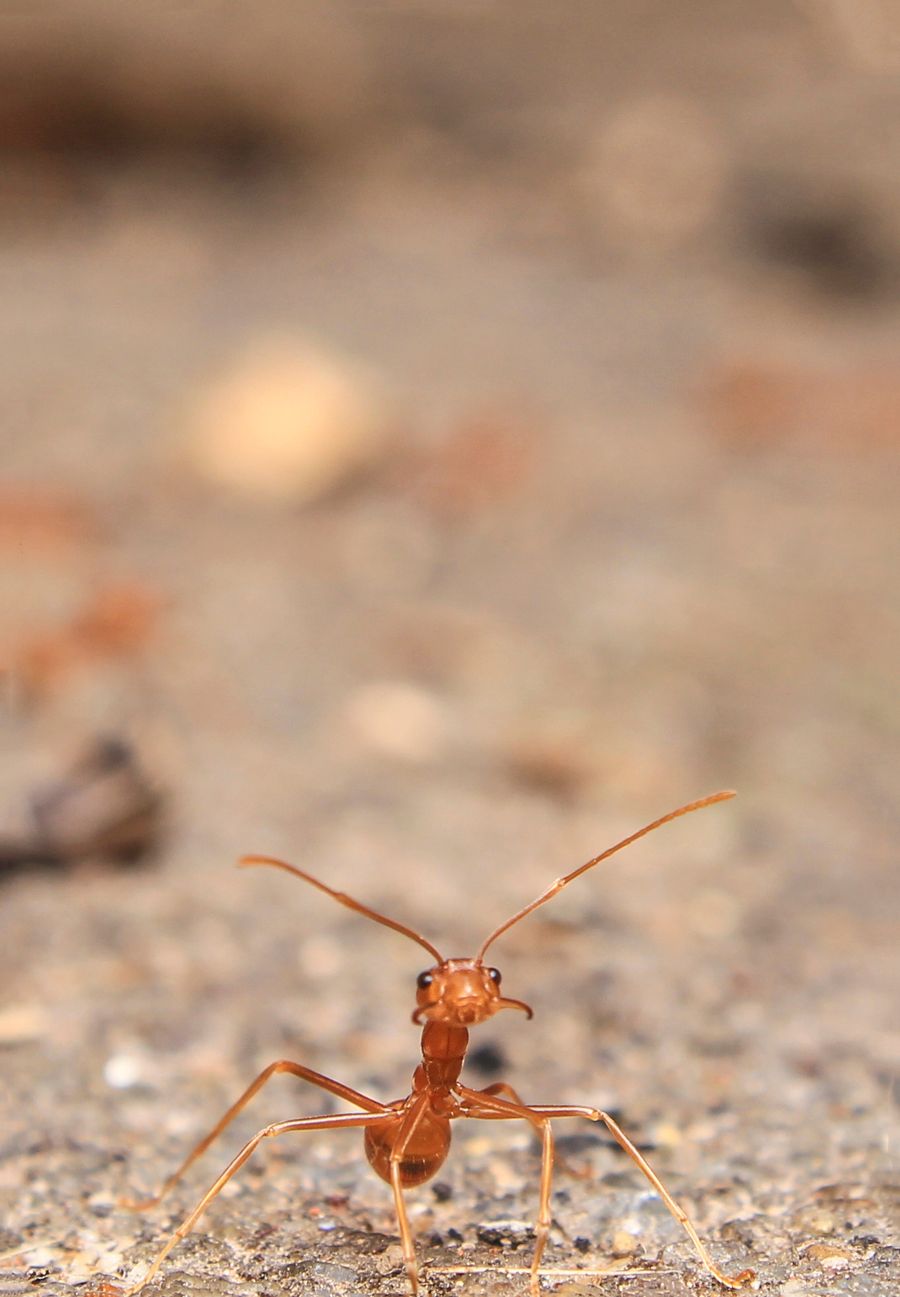
Here’s the hard truth about ants: the trail marching across your counter is only the part you can see. For every forager out looking for food, hundreds more — plus a queen who lays the eggs — are hidden in the nest. That’s why a can of spray feels satisfying and solves nothing. You kill the scouts, the colony shrugs, and they’re back in two days.
The ant killers that actually work do the opposite of instant. They’re baits: the ants think they’ve found food, carry it home, and share it — poisoning the colony from the inside out, queen included. Below are the five we recommend most, matched to where your ant problem actually is.
Contents
Quick comparison
| Product | Best for | Type | Where |
|---|---|---|---|
| TERRO T500 | Everyday indoor ants | Liquid bait stations | Indoor |
| Advion Ant Gel | Heavy / stubborn infestations | Gel bait (pro-grade) | Indoor |
| TERRO T1806 | Stopping ants before they enter | Liquid bait stakes | Outdoor |
| Amdro | Lawns, mounds & fire ants | Granular bait | Outdoor |
| Combat Max | Budget / light problems | Bait stations | Indoor |
Our top picks
1. TERRO T500 Indoor Liquid Ant Bait Stations
The one to reach for first. These are pre-filled, ready-to-use stations of TERRO’s borax-based liquid — the sweet bait that common household (sugar) ants can’t resist. Workers drink it, carry it back, and share it, so it clears the colony instead of just the visitors. The enclosed design means no sticky mess on the counter, which is exactly what you want near a kitchen.
Why we like it
- Mess-free, enclosed stations
- Kills the colony, not just foragers
- Perfect along baseboards & counters
Watch-outs
- Aimed at sweet-eating ants
- Works over days, not minutes
2. Advion Ant Gel Bait
When ants are everywhere and nothing’s touched them, this is the step up. Advion is a professional-grade gel built around indoxacarb — the same active many exterminators carry. It’s attractive to a wide range of ant species and has excellent secondary kill: ants that feed pass it to nestmates, and it cascades through the colony. You apply small dabs where you see activity.
Why we like it
- Pro-grade active ingredient
- Works across many ant species
- Strong colony-wide transfer
Watch-outs
- Syringe gel takes a little technique
- Place out of reach of pets & kids

3. TERRO T1806 Outdoor Liquid Bait Stakes
The smartest ant strategy is to stop them before they ever reach your door. These stake-in-the-ground liquid bait stations go around the foundation, patio, and known trails, intercepting foraging ants outside. They’re weather-resistant, so you can set them and let them work through the season.
Why we like it
- Stops ants at the source, outside
- Weatherproof, set-and-forget
- Pairs perfectly with an indoor bait
Watch-outs
- Outdoor use only
- Replace as bait is consumed
4. Amdro Ant Killer Outdoor Granules
If your problem is in the yard — trails across the lawn, mounds, or fire ants — this is the one. You broadcast the granules or ring the mound; foraging ants treat them as food and carry them home. It covers large areas that bait stations simply can’t, and it’s a long-standing favorite for fire-ant control.
Why we like it
- Covers large areas & mounds
- Effective on fire ants
- Great value per treated area
Watch-outs
- Outdoor only
- Reapply after heavy rain
5. Combat Max Ant Killing Bait Stations
For a light trail or a quick, cheap fix, these do the job. Combat’s child-resistant stations are sold just about everywhere, need zero setup, and use the same bait-and-share principle as the pricier options. Drop them where you see ants and let them work.
Why we like it
- Inexpensive and everywhere
- No mess, no setup
- Child-resistant design
Watch-outs
- Slower on large colonies
- You may want several packs
How to get rid of ants for good
Picking the right bait is most of the battle. Using it correctly is the rest. Here’s the method that actually clears them out — and keeps them out.

1. Find the trail — don’t wipe it out. That line of ants is your delivery route straight to the nest. Resist cleaning it until your bait is down; you want them actively marching to the food.
2. Put the spray away. This is the mistake almost everyone makes. Killing the ants you can see leaves the queen and the colony untouched, and it scatters the survivors into new trails. Bait is slower on purpose — that delay is what lets it reach the nest.
3. Place bait right on the trail. Set stations or dab gel where you actually see ants travelling. Then be patient: for a day or two you may see more ants swarming the bait. That’s not failure — that’s it working. They’re recruiting nestmates to carry the poison home.
4. Treat the outside too. Ants live outdoors and commute in. Ring the foundation with outdoor stakes or granules so you’re killing the colony at the source, not just picking off the ones who made it to your kitchen.
5. Close the door behind them. Once activity stops, seal the cracks and gaps they used, wipe down trails to erase the scent markers, and keep food and standing water off the menu. No food, no scent trail, no reason to come back.
Frequently asked questions
How long do ant baits take to work?
Usually a few days to about two weeks. Baits are designed to be shared slowly enough to reach the whole colony — if it killed instantly, it would never make it back to the nest.
Why are there MORE ants after I put bait down?
It’s a good sign. The ants have found the bait and are recruiting others to haul it home. Don’t spray them and don’t move the bait — let them keep working.
Should I use indoor or outdoor bait?
Ideally both. Outdoor bait stops the colony at the source; indoor bait handles the ants already inside. Using them together is the fastest route to an ant-free home.
Are ant baits safe around pets?
Use enclosed, child-resistant stations and place them where pets can’t reach, especially with gels. Always follow the label directions for the product you choose.